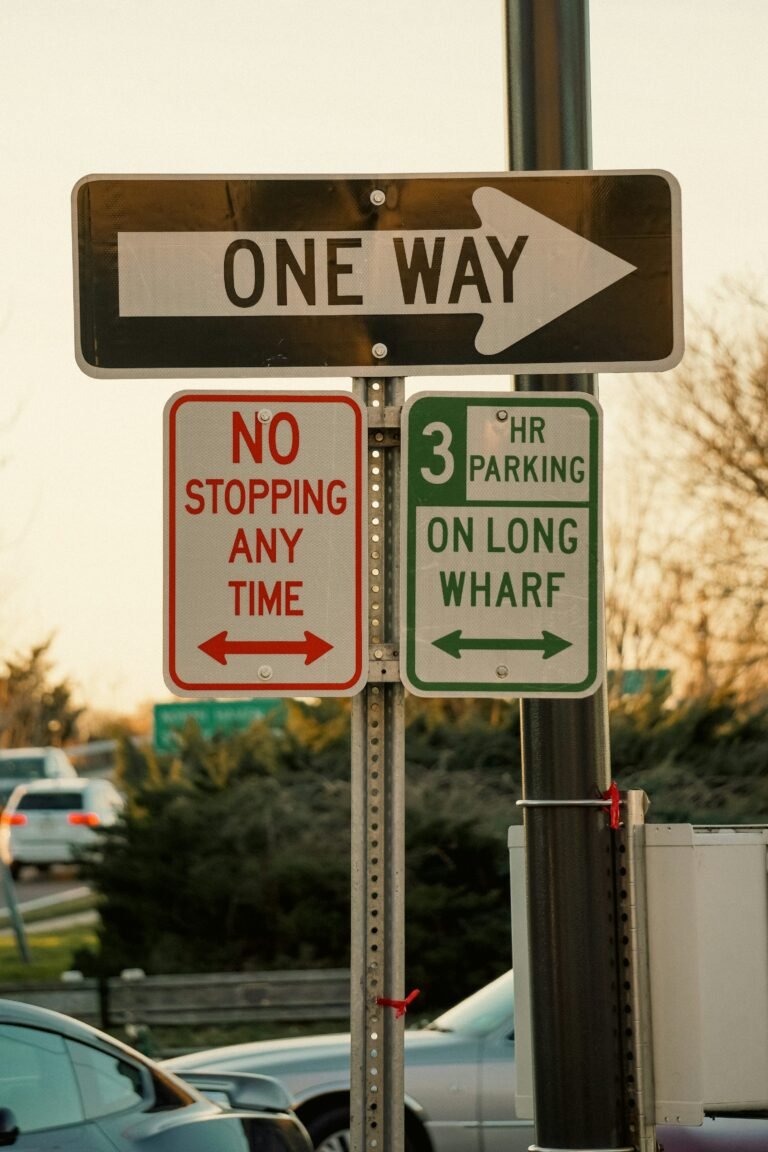
How Commercial Drivers Can Read Road Signs in 10 Seconds
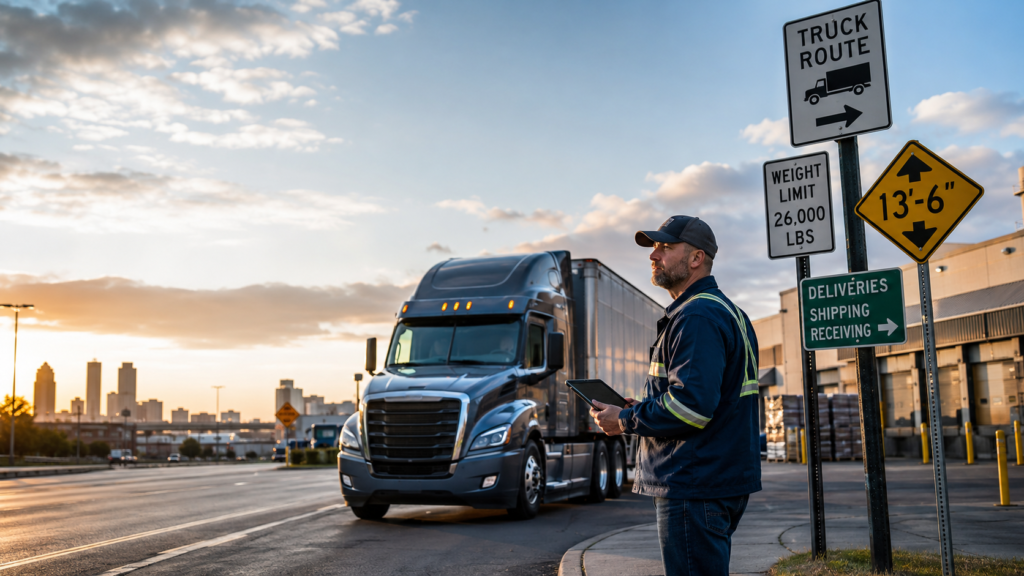
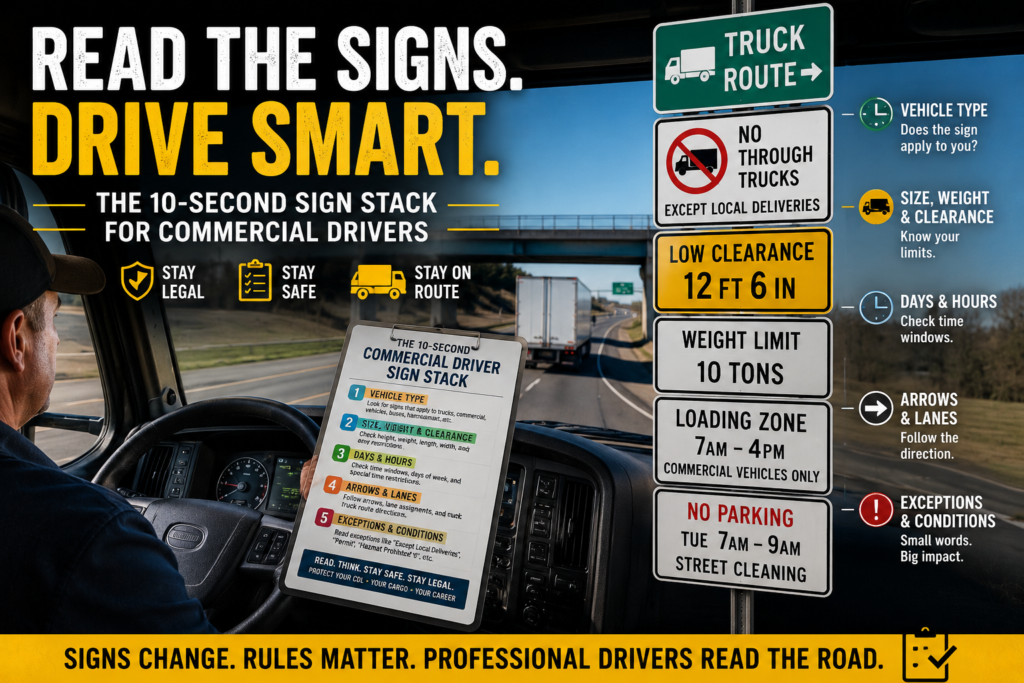
The 10-Second Commercial Driver Sign Stack
Most mistakes on the road do not come from bad drivers. They come from missed signs, fast-changing conditions, route pressure, and sign overload.
For commercial drivers, reading signs is not just about avoiding a ticket. It is about protecting your CDL, your company, your cargo, your safety record, and everyone around you.
Here is a simple sign-reading stack commercial drivers can use almost anywhere.
Step 1 — Identify the controlling sign
Start with the sign that directly affects your vehicle type.
Look for words like:
Trucks
Commercial Vehicles
CDL
Buses
Hazmat
Weight Limit
No Through Trucks
Low Clearance
Local Deliveries Only
Commercial vehicles often have separate rules from regular passenger vehicles. A road may be open to cars but restricted for trucks, buses, trailers, or vehicles carrying certain materials.
If the sign mentions your vehicle type, treat it as the controlling rule.
Step 2 — Check size, weight, and clearance limits
Before committing to a road, ramp, bridge, tunnel, or delivery entrance, scan for physical restrictions.
Watch for:
Bridge weight limits
Axle weight limits
Gross vehicle weight restrictions
Height clearance signs
Length limits
Width restrictions
Steep grades
Sharp turns
This is one of the most important sign categories for commercial drivers. A missed clearance or weight sign can cause serious damage, traffic blockage, fines, insurance issues, or CDL-related consequences.
If your truck is close to the posted limit, do not guess. Choose the safer route.
Step 3 — Read the time window
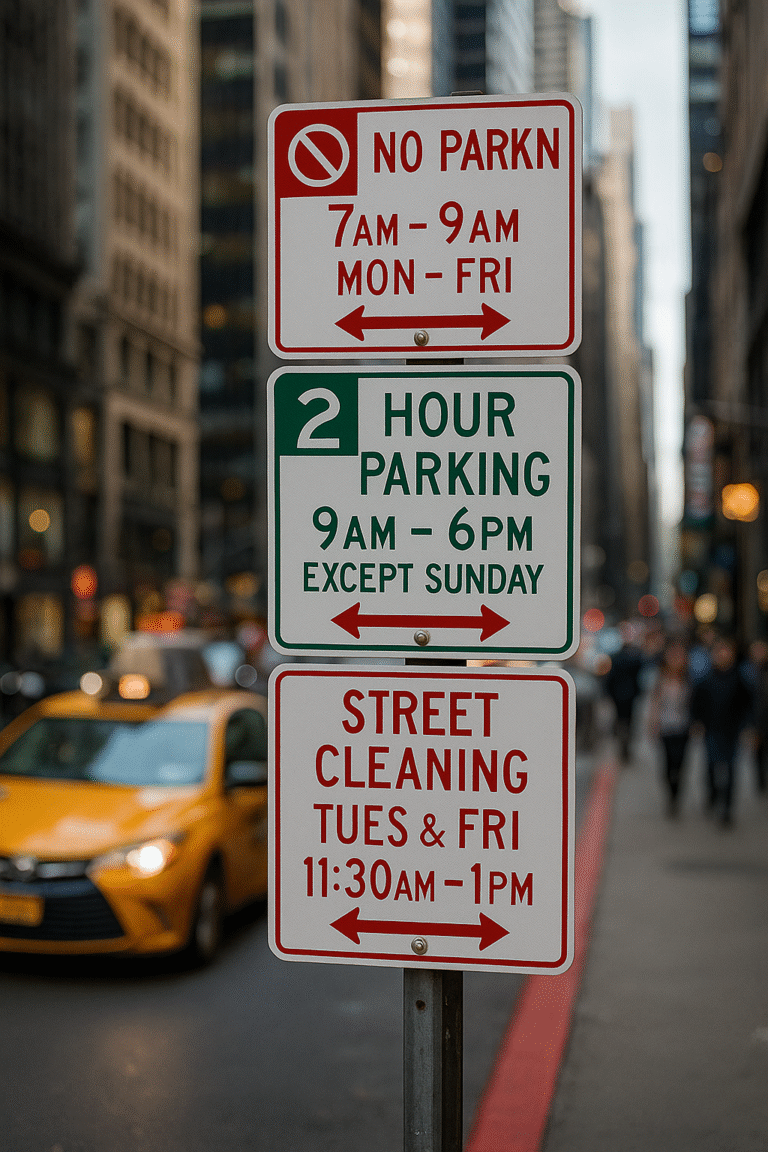
Some commercial rules only apply during certain hours or days.
Look for:
No truck traffic 7am–9am
Loading zone 6am–11am
Commercial vehicles only 8am–6pm
No deliveries during rush hour
Street cleaning restrictions
School zone hours
If the current day and time fall inside the posted window, the rule is active.
If the time window does not apply, another rule may still control the area, so keep reading the full stack.
Step 4 — Follow the arrows and lanes
Commercial driver signs often depend on direction, lane position, or route designation.
Pay close attention to:
Truck route arrows
No trucks left/right
Truck entrance signs
Truck detour signs
Hazmat route signs
Weigh station arrows
Lane restrictions
Truck speed limit signs
Arrows tell you where the rule applies. Lane signs tell you where your vehicle belongs. Missing either one can put you in the wrong lane, on the wrong road, or in a restricted area.
When in doubt, slow down early and give yourself time to read the whole sign stack safely.
Step 5 — Spot exceptions and special conditions
The small words matter.
Look for:
Except local deliveries
Except buses
Except permit holders
Authorized vehicles only
Hazmat prohibited
Emergency vehicles only
Local trucks only
No engine braking
No idling
One word can change the entire meaning of the sign.
For example, “No Through Trucks” may still allow a commercial driver making a local delivery. But “No Trucks” may be more restrictive. “Local Deliveries Only” may allow entry only if your destination is inside that restricted area.
Do not assume. Read the exception.
Quick Examples
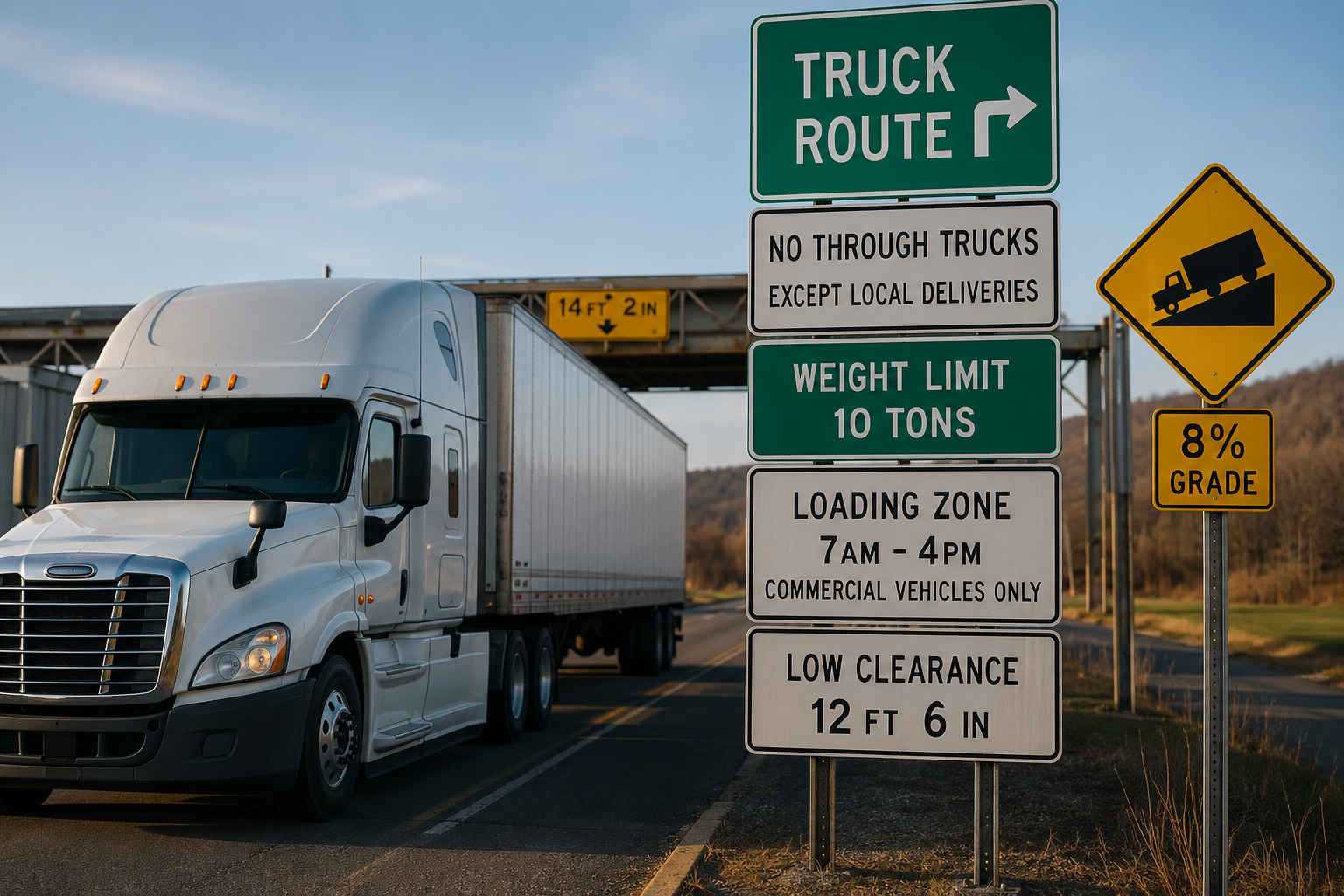
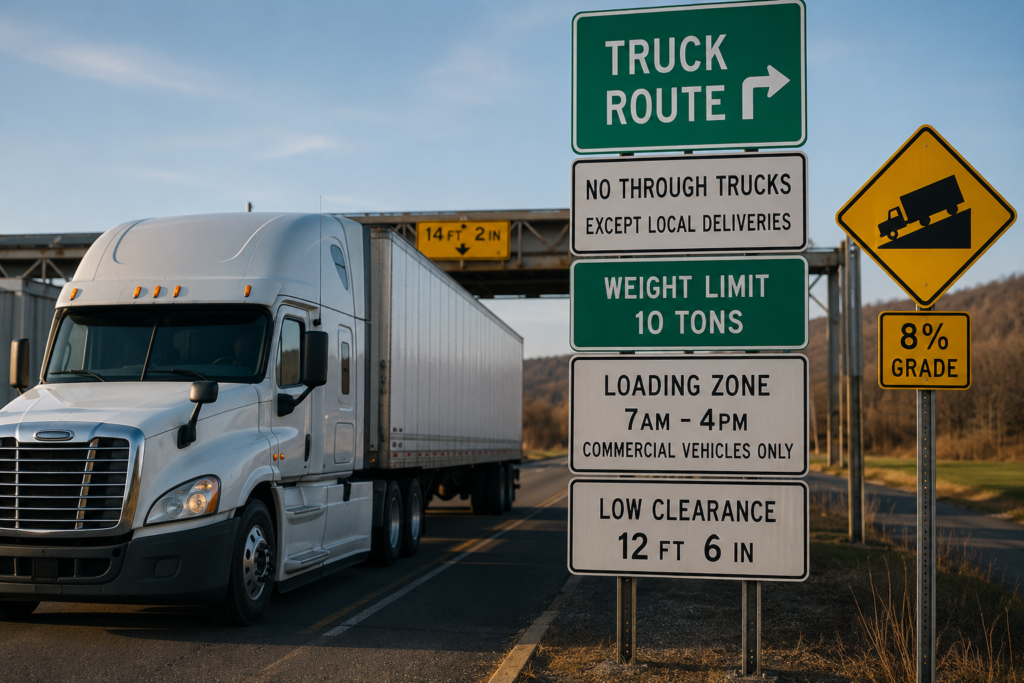
“NO THROUGH TRUCKS”
This usually means trucks should not use the road as a shortcut or pass-through route. Local deliveries may be allowed depending on the posted rules and local ordinance.
“LOW CLEARANCE 12 FT 6 IN”
If your vehicle height is close to that number, do not risk it. Clearance signs are serious. Account for load height, road slope, suspension movement, and uneven pavement.
“TRUCK ROUTE →”
Follow the arrow and stay on the designated truck route. This helps avoid restricted roads, low bridges, residential areas, and roads not designed for commercial traffic.
“WEIGHT LIMIT 10 TONS”
If your vehicle exceeds the posted weight, do not proceed unless you have proper authorization. This can apply to bridges, roads, private property, and delivery areas.
“LOADING ZONE 7AM–4PM COMMERCIAL VEHICLES ONLY”
During the posted hours, the space is usually reserved for active commercial loading or unloading. Outside the window, another parking rule may apply, so check nearby signs before stopping.
Five Common Commercial Driver Tripwires
1. Low-clearance signs
Bridges, tunnels, parking garages, drive-thrus, loading docks, and older city streets can create clearance problems fast.
2. “No Through Trucks” zones
These signs are easy to miss, especially when GPS routes a driver through residential or downtown areas.
3. Weight-restricted bridges
A road may look clear, but a bridge may not be rated for your vehicle weight.
4. Loading zones with time limits
Commercial loading zones are not always all-day parking spaces. Some only allow short-term loading during posted hours.
5. Hazmat and tunnel restrictions
Drivers carrying hazardous materials may have separate routing rules. A road that is legal for a standard truck may be prohibited for hazmat loads.
Commercial Driver Rule of Thumb
Read signs in this order:
Vehicle Type
Weight / Height / Length
Days & Hours
Arrows & Lanes
Exceptions
That five-part stack can help a commercial driver make a safer decision in seconds.
Final Word
Commercial driving requires more than steering a truck. It requires judgment, compliance awareness, route discipline, and the ability to read road signs quickly under pressure.
Every sign is part of the job.
A professional commercial driver knows how to read the road before the road becomes a problem.
Specific rules vary by city, state, company policy, vehicle type, endorsement, and cargo. When in doubt, follow the stricter rule, use approved truck routes, and verify restrictions before entering unfamiliar roads or delivery areas.